
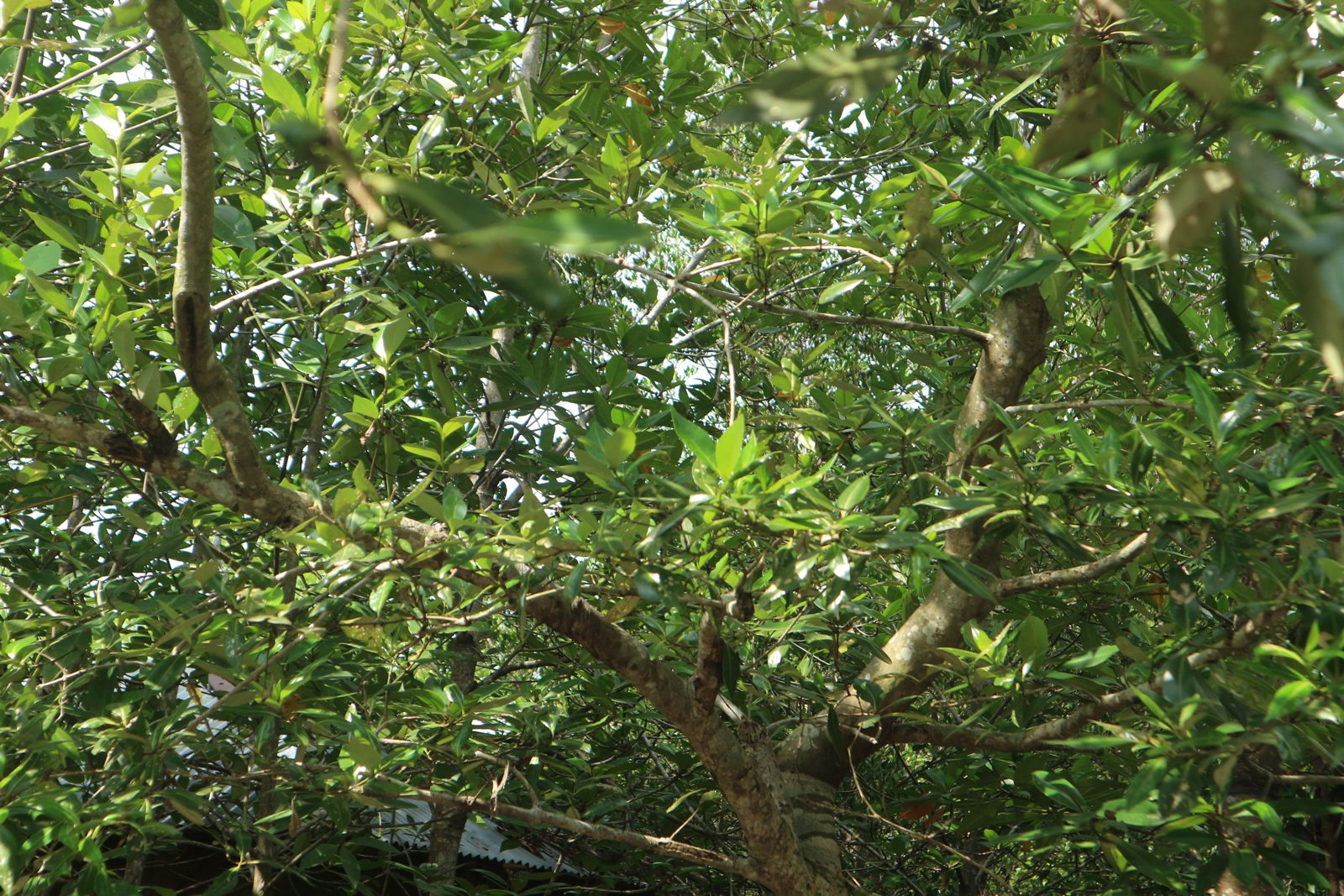
Mangrove syrup, dodol (a sweet toffee), tea, and chips are already known and sold locally in several Indonesian coastal areas (Hendrizal et al., 2026). But can these businesses really be sustainable? Which species are used, and is there enough raw material? This article summarises our study in Dumai and Bengkalis and compares it with experience in North Sumatra and North Sulawesi.
At a glance
- At three sites in Dumai and Bengkalis we recorded 15 mangrove species, but only three were being processed into products (Hendrizal et al., 2026).
- The products: dodol and syrup from Sonneratia ovata, tea from Rhizophora mucronata, and chips from Avicennia marina.
- The products are still generic and have not become regional specialties.
- In Serdang Bedagai, raw material for pedada syrup was insufficient because only one tree was fruiting (Purwoko et al., 2023).
Our study in Dumai and Bengkalis
We inventoried mangrove species and their processed products at three sites: Bandar Bakau and Purnama in Dumai City, and Pangkalan Jambi in Bengkalis Regency (Hendrizal et al., 2026). The approach was descriptive and qualitative: field observation, documentation, and semi-structured interviews with mangrove product businesses, coastal community leaders, and site managers.
Mangrove species
| Site | Number of species |
|---|---|
| Bandar Bakau | 12 |
| Purnama | 11 |
| Pangkalan Jambi | 8 |
| Total across all sites | 15 |
Source: Hendrizal et al. (2026).
- Widespread species: Avicennia marina, Rhizophora apiculata, and Excoecaria agallocha were found at all three sites, showing high adaptability to different coastal conditions.
- Site-specific species: Scyphiphora hydrophyllacea and Sonneratia alba were found only at Purnama.
- Species composition was most similar between Bandar Bakau and Purnama, and most different between Pangkalan Jambi and Purnama.
📷 [ANDRI’S PHOTO] Processed mangrove products from Dumai or Bengkalis (syrup, dodol, tea, chips) alongside the mangrove species they come from.
Processed products
| Mangrove species | Product |
|---|---|
| Sonneratia ovata | Dodol, syrup |
| Rhizophora mucronata | Tea |
| Avicennia marina | Chips |
Source: Hendrizal et al. (2026), Table 3.
So of the 15 species present, only three were being used. These products have economic value, nutritional potential, and health benefits, and give coastal communities an alternative income. However, they are still generic and have not become regional specialties (Hendrizal et al., 2026).
In other regions, diversification is more specific, for example nipa palm processed into sugar and traditional drinks (Hendrizal et al., 2026). Nipa was also recorded at our study sites, so this is an opportunity not yet taken up.
Lessons from Serdang Bedagai: is there enough raw material?
Purwoko et al. (2023) asked a question that is often overlooked: can the mangrove forest actually supply enough raw material for a food business?
At the Kampung Nipah Mangrove Tourism Area, Serdang Bedagai, the Muara Tanjung Women’s Group processes three mangrove species:
- Avicennia marina into dodol;
- Sonneratia caseolaris (pedada) into fruit syrup;
- Acanthus ilicifolius (sea holly) into crackers.
The findings:
- A. marina and A. ilicifolius were abundant enough for dodol and cracker production.
- Pedada was not abundant enough for syrup. The study site had only one fruiting pedada tree, yielding about 10 kg of fruit per year, while one tree can produce about 5–20 kg.
- The recommendation: enrich the pedada population to support syrup production.
The lesson is clear: before developing a product, calculate how much raw material the forest can supply. A popular product without enough raw material can end up pressuring the very forest it is meant to conserve.
Lessons from Bunaken: local knowledge as product capital
In coastal communities of Bunaken National Park, Acanthus ilicifolius and Avicennia marina play central roles as sources of food and traditional medicine (Ogi et al., 2026). The researchers recommend that mangrove management go beyond ecological conservation and use local wisdom as a foundation for bioprospecting, supporting food security, health, and the well-being of coastal communities.
The way forward: from generic products to regional specialties
Based on these three studies:
- Inventory first, produce later. Know which species are available and in what quantity (Hendrizal et al., 2026; Purwoko et al., 2023).
- Calculate raw-material carrying capacity, especially for fruit-based products where few trees bear fruit (Purwoko et al., 2023).
- Enrich raw-material species through planting, for example pedada for syrup (Purwoko et al., 2023).
- Draw on local uniqueness. Differences in species composition between sites create room for distinctive products in each area (Hendrizal et al., 2026).
- Build capacity in processing, packaging, and marketing, and brand products as regional specialties. This can bring greater economic impact while encouraging mangrove conservation (Hendrizal et al., 2026).
We recommend integrating mangrove conservation with product innovation as a strategy for sustainable coastal management (Hendrizal et al., 2026).
🌿 From the Field — [TO BE WRITTEN BY ANDRI: stories from mangrove product businesses you met in Dumai or Bengkalis, such as raw-material or marketing challenges. Get permission before naming anyone. Include only what you actually experienced.]
🤝 Support for Mangrove-Based Livelihood Programmes
For companies, village governments, and NGOs: we help with species inventories, raw-material carrying capacity assessments, and planning sustainable mangrove product enterprises.
[Button: Discuss Your Programme — link to /en/services/]
Read also: Local Knowledge That Protects Mangroves
References
All references below are open access.
- Hendrizal, A., Fatmawati, R., Sibagariang, R. D., & Firdaus, L. N. (2026). Inventory of mangrove types and economic potential analysis through mangrove based products. Egyptian Journal of Aquatic Biology and Fisheries, 30(1), 3577–3586. https://doi.org/10.21608/ejabf.2026.426782.6642
- Ogi, N. L. I. M., Watung, F. A., Rampengan, M. M. F., Rogahang, M. T., Roring, V. I. Y., & Semuel, M. Y. (2026). Ethnobotanical study of mangroves from coastal communities of Bunaken National Park, Indonesia. BIOTROPIA, 33(3), 389–402. https://doi.org/10.11598/btb.2026.33.3.2748
- Purwoko, A., Susilowati, A., & Situmorang, A. I. (2023). Assessing the carrying capacity of mangroves as raw materials for culinary products: Case study in Serdang Bedagai, North Sumatra, Indonesia. Biodiversitas, 24(1), 250–257. https://doi.org/10.13057/biodiv/d240130