
Mangrove restoration is often promoted as a climate solution, because these coastal ecosystems store large amounts of carbon, mostly in their soils (Jimenez et al., 2026). A question that is rarely answered plainly is this: after seedlings are planted, how many years pass before the soil and the forest truly recover? This article summarizes open-access studies from Brazil, Thailand, and Australia, plus a global perspective, and explains how to read the claim “restoration captures carbon” with care.
Quick summary
- Soil holds the largest share of ecosystem carbon: 77% in the top meter (Ohtsuka et al., 2024).
- In Brazil, the soil health index of a 9-year-old planted stand (0.37) was not significantly different from degraded land (0.25). At 13 years it was 0.52, against 0.99 for mature forest (Jimenez et al., 2026).
- In Thailand, woody biomass in Avicennia alba plantations rose 40% over four years (Ohtsuka et al., 2024).
- In Australia, a study of coastal wetland restoration sites (saltmarsh and mangrove) aged 6–33 years found that time to equivalence with natural sites ranges from under 5 to more than 30 years, depending on what is measured (Lanceman et al., 2026).

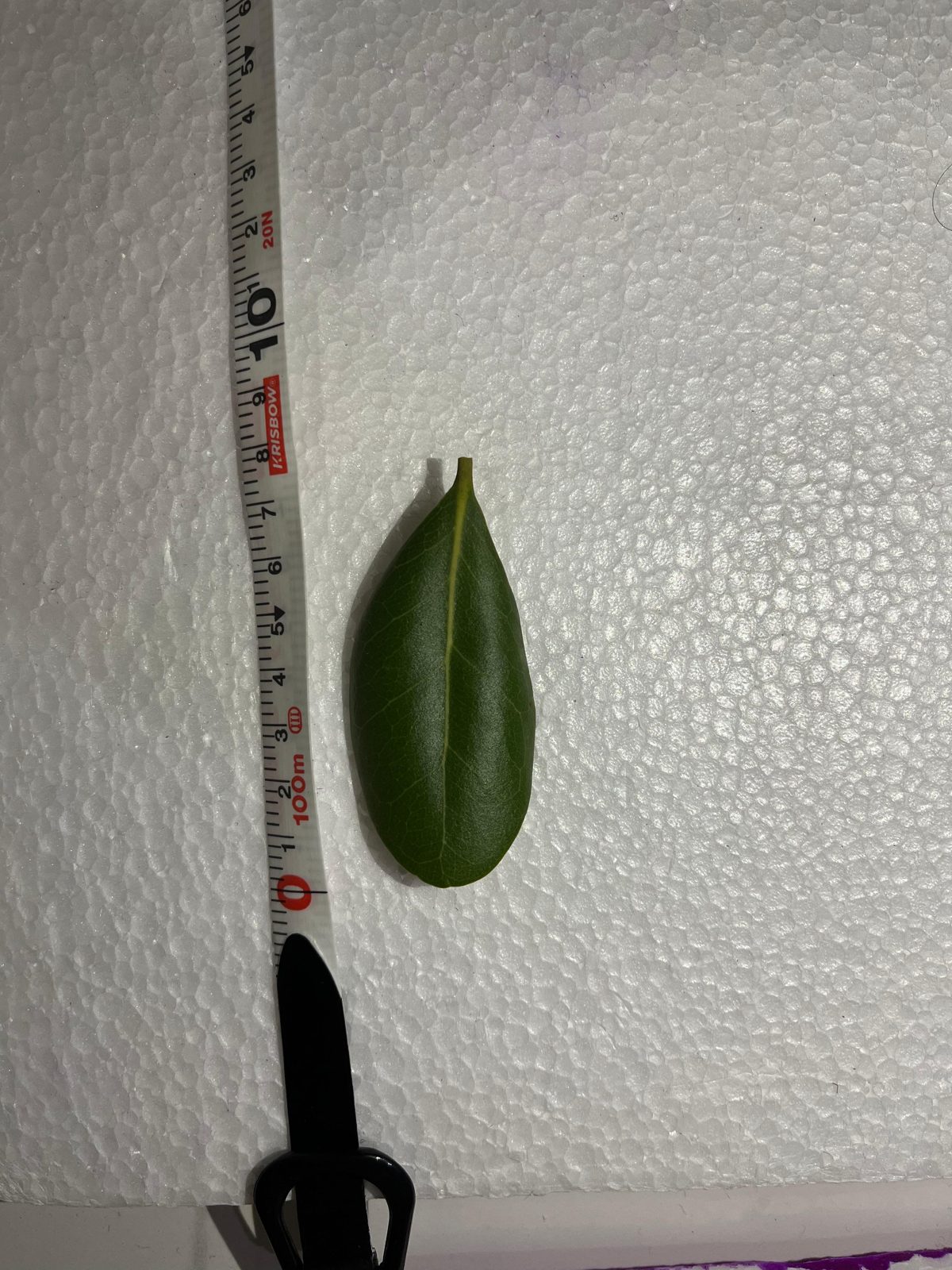
Avicennia alba (white mangrove), Purnama, Dumai, 2025. Mangrove Insight field documentation.
Why the question matters
The top meter of soil holds 77% of mangrove ecosystem carbon stocks (Ohtsuka et al., 2024). A restoration project that only counts growing trees therefore misses most of the story. Meanwhile the pressure on mangroves is real: in Thailand, one-third of mangrove forest has been destroyed, mainly because of shrimp farming (Ohtsuka et al., 2024).
Brazil: soil recovers step by step
Jimenez et al. (2026) studied the Cocó River estuary in Ceará, northeastern Brazil. They compared degraded land, two planted Rhizophora mangle stands created through community initiatives (9 and 13 years old), and mature forest undisturbed for at least three decades.
They measured more than carbon. They built a soil health index from three groups of properties: processes that govern carbon dynamics (soil texture, organic carbon, iron), the ability to immobilize contaminants (redox potential, pH, forms of iron), and nutrient cycling (enzyme activity and available phosphorus). The index is relative, not a direct carbon stock, so read it as “how close is this soil’s functioning to that of mature forest”.
The results:
| Site | Soil health index |
|---|---|
| Mature forest | 0.99 |
| Planted 13 years | 0.52 |
| Planted 9 years | 0.37 |
| Degraded | 0.25 |
Source: Jimenez et al. (2026).
At 9 years, soil functioning had reached only 37% of its potential and was not significantly different from the degraded site. At 13 years it rose to 52% and was significantly higher than the degraded site (Jimenez et al., 2026). Recovery is under way, but after more than a decade the soil is only about halfway there.
Waterlogging is part of the explanation. Long-flooded soil limits oxygen diffusion and shifts microbial metabolism toward pathways that break down organic matter more slowly, so organic matter is retained (Jimenez et al., 2026).
Thailand: woody biomass rises fast
Ohtsuka et al. (2024) studied three Avicennia alba plantations of different ages in Samut Prakarn province, Central Thailand. Woody biomass across these stands rose 40% over four years, from 79.7 to 111.7 Mg C per hectare. Fine-root biomass down to 100 cm was 4.47, 4.24, and 6.92 Mg C per hectare at the 10-, 12-, and 14-year-old sites, and the 14-year-old site was significantly higher than the younger ones.
Fine roots are a small carbon stock, but they contribute strongly to soil carbon because they are produced in large amounts and decompose slowly (Ohtsuka et al., 2024). Ohtsuka et al. also cite another Thai study: abandoned shrimp ponds showed recovery of surface soil carbon through natural regeneration, without active restoration.
Australia: recovery time depends on what is measured
Lanceman et al. (2026) used a space-for-time approach: instead of following one site for decades, they compared coastal wetland restoration sites (saltmarsh and mangrove) aged 6–33 years in two estuaries in eastern Australia (Hunter River and Maroochy River). This approach collects data from sites of different ages with similar environments, and ideally runs alongside monitoring of natural reference ecosystems.
Their results show that the time to reach equivalence with natural ecosystems depends on the property or service measured: roughly under 5 years, 15–25 years, or more than 30 years. At saltmarsh sites, even the oldest (30–33 years after restoration) still differed from natural sites in plant community composition, so the authors think that succession may take longer than 30 years. This finding is specific to saltmarsh, not mangrove.
They also note a common weakness of restoration research: many studies measure outcomes at only one or a few time points, usually over short periods (under 10 years on land and under 5 years in marine projects). Conclusions drawn from data that short are hard to trust.
Why failures keep recurring
The perspective by Lovelock et al. (2022) stresses that large-scale mangrove planting has often failed. The causes they name: projects were carried out at unsuitable sites, gave up best practice to cut costs and meet funding deadlines, and targeted the number of seedlings planted rather than successful establishment. Planting on low mudflats or seagrass meadows is easier and cheaper than restoring disused aquaculture ponds, yet those sites are less suitable.
The best sites are former mangrove land that is degraded and fragmented but where hydrological processes are not severely changed and the tidal flows carrying sediment, nutrients, and propagules are intact (Lovelock et al., 2022). They add that successful restoration needs commitment from the communities that manage the mangroves, and that success can be undermined when economic policies change. In the Mekong Delta, for example, large-scale successful restoration was partly undermined by policies favoring commodities such as shrimp.
How to read the claim “restoration captures carbon”
From these four studies, a few questions are worth asking:
- How old is the site? At 9 years, the planted soil in Brazil was not yet different from degraded land (Jimenez et al., 2026).
- What was measured? Trees and soil do not necessarily recover at the same speed, yet soil holds the largest share of carbon (Ohtsuka et al., 2024).
- Is there a natural reference? Without natural forest as a yardstick, “recovered” has no measure (Lanceman et al., 2026).
- How were sites compared? Studies comparing scattered sites have a weakness: soil properties, hydrology, and the initial degree of destruction may differ (Ohtsuka et al., 2024).
- Is the site suitable? The right site and intact hydrology shape success (Lovelock et al., 2022).
So, does it bring the carbon back?
Yes, but slowly, and not automatically. In Thailand, woody biomass rose fairly quickly within a few years, while in Brazil the 13-year-old planted soil reached only about half the index value of mature forest, and in Australia some ecosystem properties needed more than 30 years to match natural sites. Carbon planning for restoration projects should therefore be conservative and backed by long-term monitoring, not by sequestration figures promised from the first year.
Read next
- How to Measure Mangrove Soil Carbon: Cores, Bulk Density, and Carbon Content
- Why So Many Mangrove Restoration Projects Fail, and How to Avoid It
- How Much Carbon Do Mangrove Forests Store?
References
All references below are open access.
- Jimenez, L. C. Z., Queiroz, H. M., Cherubin, M. R., Ruíz, F., & Ferreira, T. O. (2026). Tracking mangrove restoration using a biogeochemical soil health index and ecosystem service indicators. Scientific Reports, 16, 1236. https://doi.org/10.1038/s41598-025-30909-2
- Lanceman, D., Glamore, W. C., Slavich, E., & Mayer-Pinto, M. (2026). Restoration transforms coastal wetland ecosystem services over time. Ecological Applications, 36(6), e70292. https://doi.org/10.1002/eap.70292
- Lovelock, C. E., Barbier, E. B., & Duarte, C. M. (2022). Tackling the mangrove restoration challenge. PLoS Biology, 20(10), e3001836. https://doi.org/10.1371/journal.pbio.3001836
- Ohtsuka, T., Umnouysin, S., Suchewaboripont, V., Yimatsa, N., Rodtassana, C., Kida, M., Iimura, Y., Yoshitake, S., Fujitake, N., & Poungparn, S. (2024). Biomass recovery of coastal young mangrove plantations in Central Thailand. Scientific Reports, 14, 11359. https://doi.org/10.1038/s41598-024-61979-3