
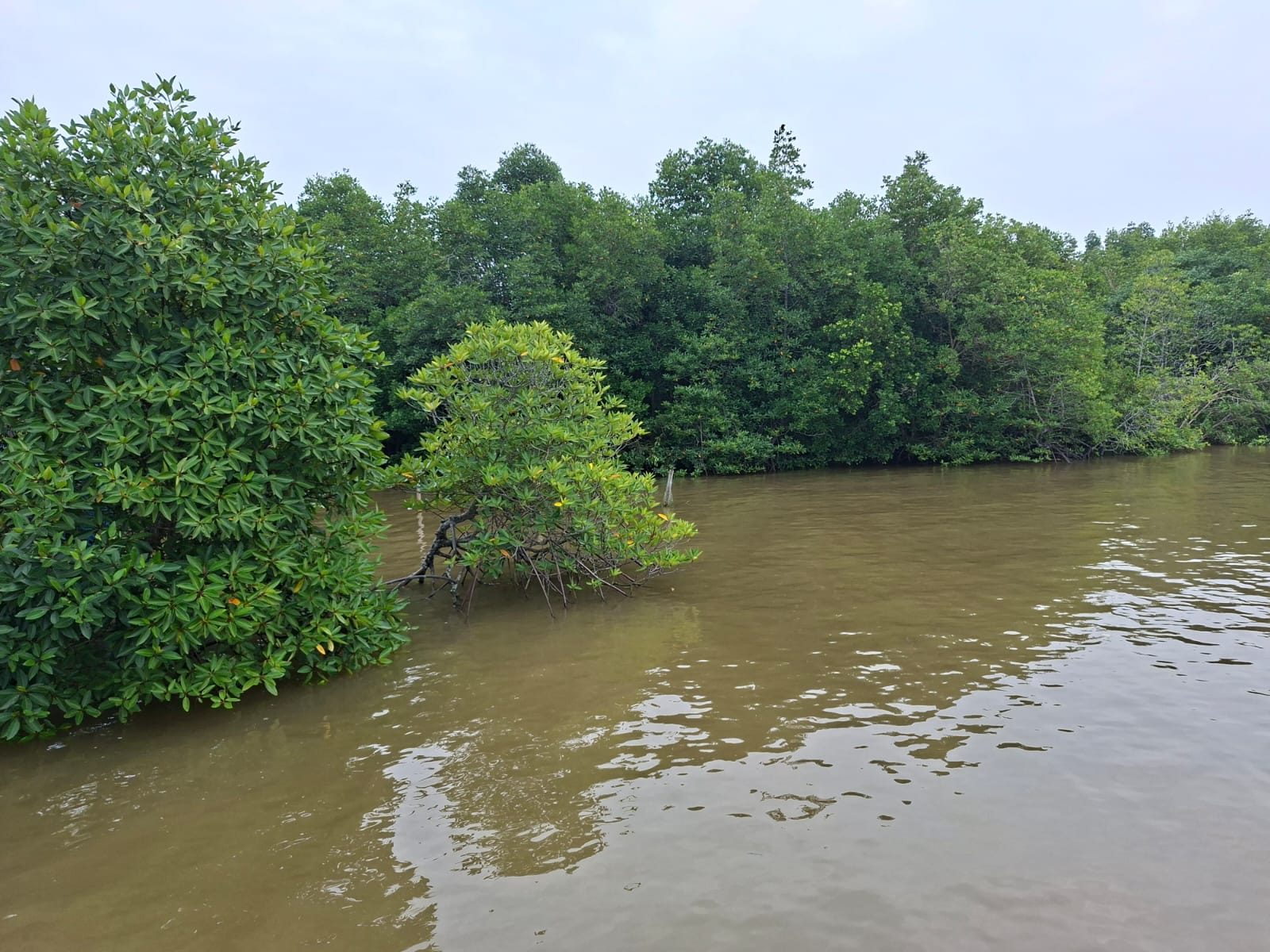
Most people walking into a mangrove forest for the first time see only “mangrove trees”. Yet a single stretch of coast can hold more than a dozen plant species, each with different roots, leaves, and fruits. Some are true mangroves; others only grow along the forest edge. This article shows you how to tell them apart using features you can see in the field.
At a glance
- Worldwide there are only about 70 mangrove species in 40 genera (Friess, 2016).
- True mangroves grow only in the tropical intertidal zone. Mangrove associates can also live outside it (Polidoro et al., 2010).
- The fastest way to identify a genus is to look at its roots, then its fruit, then its leaves.
- In 2001, Indonesia held more than one fifth of the world’s mangroves (Friess, 2016).
What is a “true mangrove”?
Scientists separate two groups. True mangroves grow only in tropical intertidal habitats. Mangrove associates can also be found outside them (Polidoro et al., 2010).
Duke gives a more precise definition: a true mangrove is a tree, shrub, palm, or ground fern, generally taller than 0.5 m, that normally grows above mean sea level in the intertidal zone of tropical coasts or estuaries (cited in Polidoro et al., 2010).
The difference matters in practice. In Bintuni Bay, West Papua, Kasihiw et al. (2023) recorded 57 plant species from 25 families in the mangrove area. Only 29.82% were true mangroves. The other 70.18% were associates such as climbers, epiphytes, ferns, and palms. If every plant in a mangrove area is counted as a “mangrove”, species richness looks much higher than it really is.
Why are there so few mangrove species?
Compared with lowland tropical rainforest, mangroves have very few species: about 70 in 40 genera worldwide (Friess, 2016), drawn from 17 families (Polidoro et al., 2010).
The reason is a harsh environment of salt water, oxygen-poor mud, and tidal flooding. Only a few land-plant lineages managed to make that evolutionary jump (Friess, 2016). The adaptations that let mangroves survive are now our best clues for identifying them.
Three field clues
1. Look at the roots
Mangrove soils are low in oxygen and regularly flooded. Mangroves cope by growing above-ground root structures that allow gas exchange (Friess, 2016). Their surface carries lenticels, small pores through which oxygen enters and reaches the submerged roots (Nizam et al., 2021). Root shape differs between genera, which makes it the quickest clue.
| Root type | What you see | Genus |
|---|---|---|
| Stilt roots | Many branched roots arching down from the base of the trunk | Rhizophora |
| Knee roots + buttresses | Horizontal roots that loop up out of the mud like knees; buttressed trunk base | Bruguiera |
| Appressed stilt roots | Stilt roots pressed close to the trunk | Ceriops |
| Pneumatophores | Small roots sticking straight up from the mud | Avicennia |
Table sources: Ngernsaengsaruay et al. (2024) for Rhizophora, Bruguiera, and Ceriops; Salas-Rabaza et al. (2024) for Avicennia.
Pneumatophores grow against gravity, straight up until their tips reach the air (Nizam et al., 2021). There can be a lot of them: one Avicennia tree may have more than 10,000 pneumatophores. The literature puts their height at up to about 30 cm, but in scrub mangroves in Yucatán, Mexico, pneumatophores reached 48 cm (Salas-Rabaza et al., 2024).
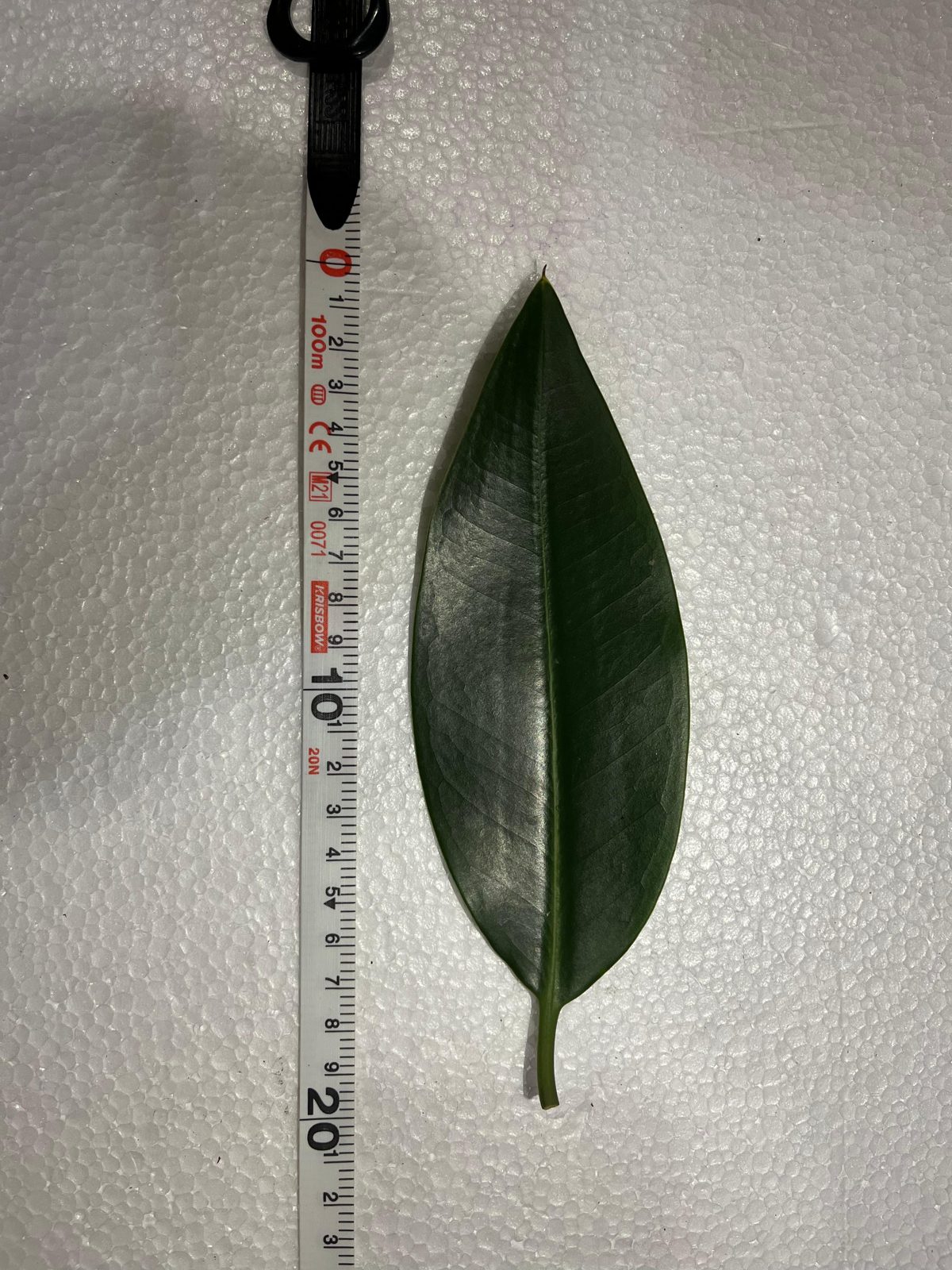
Rhizophora apiculata (Bakau), Bandar Bakau, Dumai, 2025. Field documentation, Mangrove Insight.
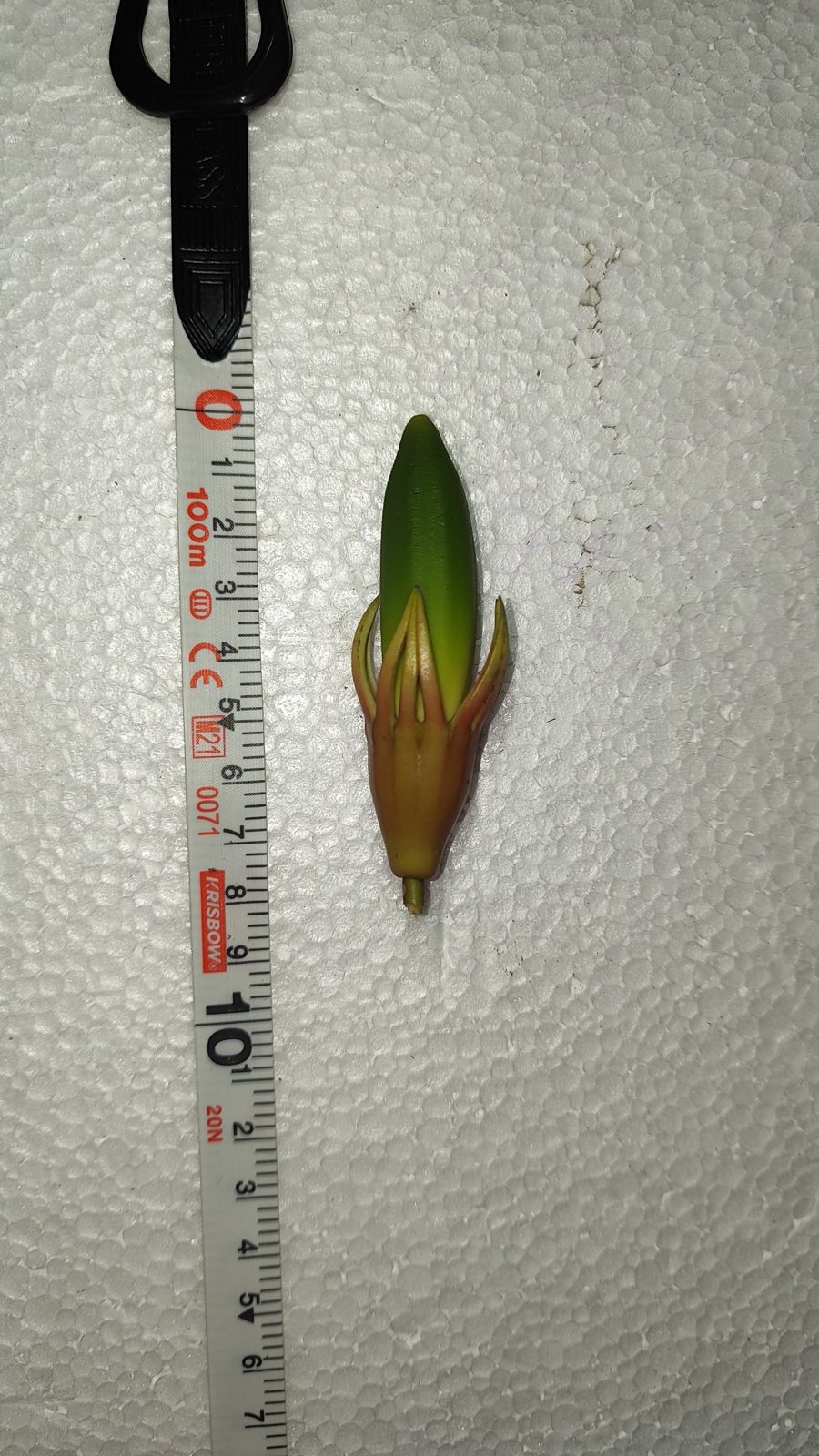
Bruguiera gymnorrhiza (Tumu), Bandar Bakau, Dumai, 2025. Field documentation, Mangrove Insight.
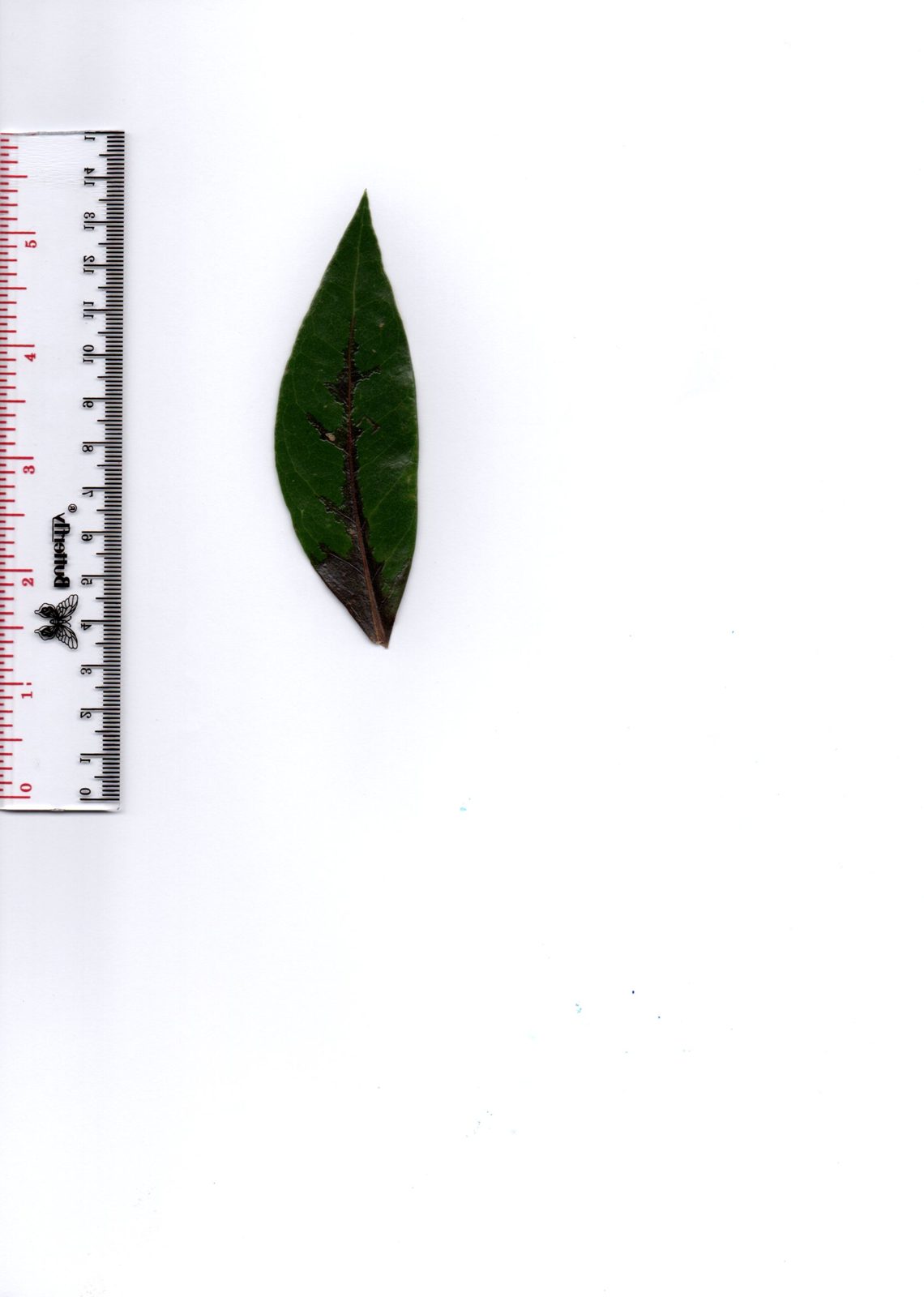
Avicennia marina (Api-Api), Pangkalan Jambi, Bengkalis, 2025. Field documentation, Mangrove Insight.
2. Look at the fruit
Many mangroves do something few other plants do: their seeds germinate while still attached to the parent tree. This is called vivipary. It lets the seedling store food reserves and root quickly once it drops (Friess, 2016).
You can tell two types apart (Nizam et al., 2021):
- True vivipary in the Rhizophoraceae (Rhizophora, Bruguiera, Ceriops). The seedling stem (hypocotyl) pushes through the fruit wall and hangs down like a long spear.
- Cryptovivipary in Avicennia and some other groups. The embryo develops but does not break through the fruit wall before it falls.
If you see long green “spears” hanging from the branches, you are almost certainly looking at a member of the Rhizophoraceae.
3. Look at the leaves, and think about salt
Mangroves handle salt in two main ways (Wei et al., 2026):
- Salt excluders filter salt out in the root cortex. The xylem sap of Rhizophora mangle, for example, has only one tenth the salt concentration of seawater.
- Salt secretors push salt out through salt glands on the leaf surface, as in Avicennia marina.
Some species also shed salt by dropping leaves (Friess, 2016). Salt strategies are hard to see directly, so treat them as supporting evidence. Roots, fruit, and leaves remain the main basis for identification.
The hardest case: Rhizophora apiculata or R. mucronata?
These two are the most often confused. A taxonomic revision by Ngernsaengsaruay et al. (2024) gives a clear key:
| Feature | R. apiculata | R. mucronata |
|---|---|---|
| Maximum leaf width | up to 8.5 cm | up to 13 cm |
| Leaf tip (small stiff point) | under 3 mm | over 3 mm |
| Inflorescence | 2 flowers, on leafless twigs | 3–9 flowers, in leaf axils, branched |
| Flower stalk | none (sessile) | present (pedicelled) |
| Fruit length (before germination) | 1.5–2.6 cm | 3.7–5 cm |
| Colour of cotyledon “collar” | red or reddish green | pale green or greenish yellow |
| Hypocotyl length | 25–45 cm | 25–70 cm |
Quick check: look at the leaf tip and where the flowers or fruits sit. A short leaf tip and small, stalkless fruits on leafless twigs point to R. apiculata.
Note: this key was built from Thai specimens. Measurements in Indonesia may differ slightly, so use several features together.
Where do these species grow?
Mangroves are not arranged at random. On gently sloping shores, species sort themselves by how often the tide floods them. Only a few pioneer species survive the extreme conditions at the seaward edge, and diversity rises towards land as flooding decreases (Friess, 2016).
In Papua, mangrove forests are dominated by the Rhizophoraceae, at more than 70% (Kasihiw et al., 2023). The pattern differs on other coasts depending on tides, sediment, and freshwater supply.
Why species identification matters
Indonesia held more than one fifth of the world’s mangroves in 2001 (Friess, 2016) and is described as having the largest mangrove extent in the world (Basyuni et al., 2026). What happens to Indonesia’s mangroves directly affects mangroves globally.
Not all species share the same fate. Of the world’s 70 mangrove species, 11 (16%) are listed as threatened on the IUCN Red List (Polidoro et al., 2010). One of them, Bruguiera hainesii, is known only from a few scattered sites, including in Indonesia.
Species of the high intertidal and upstream estuarine zones are the most threatened, because those areas are cleared first for aquaculture and agriculture (Polidoro et al., 2010). In Southeast Asia, oil palm expansion accounted for 16% of mangrove loss between 2000 and 2012 (Friess, 2016).
Recognising species is the first step for everything that follows: vegetation surveys, carbon accounting, and restoration that plants the right species in the right zone.
Read next: How to Survey Mangrove Vegetation: Transects and Plots
References
All references below are open access.
- Basyuni, M., Tanjung, I. L., Slamet, B., Ritonga, F. N., Al Mustaniroh, S. S., Larekekng, S. H., Arifanti, V. B., Iryanthony, S. B., Sumarga, E., Baba, S., Salmo, S. G., III, Ginting, E., Kusumawardani, N., & Omoto, R. (2026). UAV-based mangrove biomass estimation and carbon potential valuation in North Sumatra, Indonesia. Carbon Balance and Management, 21, 71. https://doi.org/10.1186/s13021-026-00440-6
- Friess, D. A. (2016). Mangrove forests. Current Biology, 26(16), R746–R748. https://doi.org/10.1016/j.cub.2016.04.004
- Kasihiw, P., Bawole, R., Marwa, J., Murdjoko, A., Wihyawari, A., Heipon, Y., Cabuy, R. L., Benu, N. M. H., & Hematang, F. (2023). Floristic richness and diversity of Bintuni mangrove, Bird’s Head Peninsula, West Papua, Indonesia. Biodiversitas, 24(5), 2887–2897. https://doi.org/10.13057/biodiv/d240543
- Ngernsaengsaruay, C., Chanton, P., Leksungnoen, N., Uthairatsamee, S., & Mianmit, N. (2024). A taxonomic revision of Rhizophora L. (Rhizophoraceae) in Thailand. PeerJ, 12, e17460. https://doi.org/10.7717/peerj.17460
- Nizam, A., Meera, S. P., & Kumar, A. (2021). Genetic and molecular mechanisms underlying mangrove adaptations to intertidal environments. iScience, 25(1), 103547. https://doi.org/10.1016/j.isci.2021.103547
- Polidoro, B. A., Carpenter, K. E., Collins, L., Duke, N. C., Ellison, A. M., Ellison, J. C., Farnsworth, E. J., Fernando, E. S., Kathiresan, K., Koedam, N. E., Livingstone, S. R., Miyagi, T., Moore, G. E., Nam, V. N., Ong, J. E., Primavera, J. H., Salmo, S. G., III, Sanciangco, J. C., Sukardjo, S., . . . Yong, J. W. H. (2010). The loss of species: Mangrove extinction risk and geographic areas of global concern. PLoS ONE, 5(4), e10095. https://doi.org/10.1371/journal.pone.0010095
- Salas-Rabaza, J. A., Espinosa, L. Y., Cejudo, E., Cerón-Aguilera, G., Us-Santamaría, R., & Andrade, J. L. (2024). Pneumatophore CO₂ effluxes decrease with increased salinity in mangrove forests of Yucatan, Mexico. Scientific Reports, 14, 18449. https://doi.org/10.1038/s41598-024-68822-9
- Wei, M., Sun, L., Zhuang, L., Hong, X., Guo, Z., Li, H., Huang, H., Zhang, L., Ma, D., Shen, Z., Wang, X., Zhu, X., Tang, H., & Zheng, H. (2026). A laser capture microdissection-based transcriptome analysis on salt glands highlights salt secretion mechanism in mangrove plant Avicennia marina. The Plant Journal, 128(1), e71143. https://doi.org/10.1111/tpj.71143